Introduction:
Peripheral T-cell lymphomas (PTCLs) are rare, heterogeneous hematological disorders with poor outcomes under standard therapies. In 2019, Ukraine launched a prospective national lymphoma registry to collect real-world data on subtypes to better understand clinical features, treatment effectiveness, and management disparities.
Methods:
Between 2019 and 2025, 1,763 patients were registered; 100 with nodal PTCLs were available for analysis. Data on histology, clinical characteristics, treatment approaches, responses, and survival outcomes were recorded.
Objectives:
To identify common PTCL subtypes, describe clinical features, patterns of care, and outcomes, and highlight the importance of real-world data.
Results:
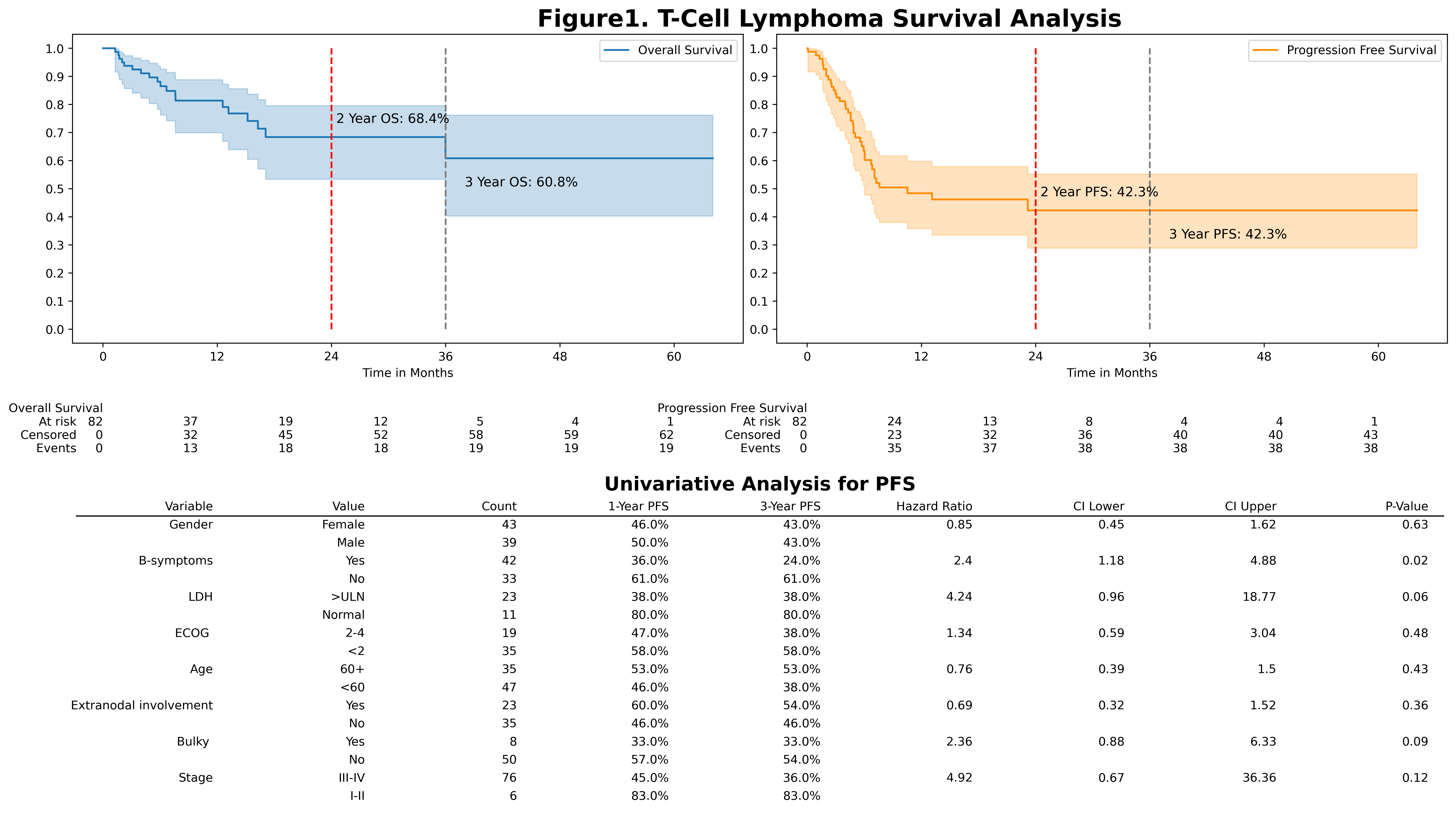
A total of 100 patients with PTCLs and NKTCL were registered by 15 centers. Median age at diagnosis was 54 years (range 18–83), with a male:female ratio of 49:51. The most common histologic subtypes were PTCL-NOS (35), AITL (25), ALK-negative ALCL (11), ATLL (9), and ALK-positive ALCL (7). Most frequent first-line regimens were CHOEP, CHOP/CHOP-like, and BV-CHP (41.0%, 29.5%, and 10.3%), with transplantation in 5 cases (6%). First-line therapy data were available in 78 patients. Mean follow-up was 16 months (0.3–64). Twenty-nine patients were refractory or relapsed; mean time to event was 5.5 months (0.07–23). One- and two-year OS were 81% and 68.4%, while PFS rates were 48% and 42.3%, respectively. In univariate analysis, only the presence of B-symptoms showed significant association with relapse (p=0.02).(Figure1)
Conclusion:
The Ukraine Lymphoma Registry describes the unfavorable outcomes of patients with PTCL treated in a real-world setting, in an area with frequent limitations in access to medication and diagnostics. These findings remain preliminary, and additional analyses are needed to improve characterization of care patterns, risk prediction, and optimal treatment strategies.